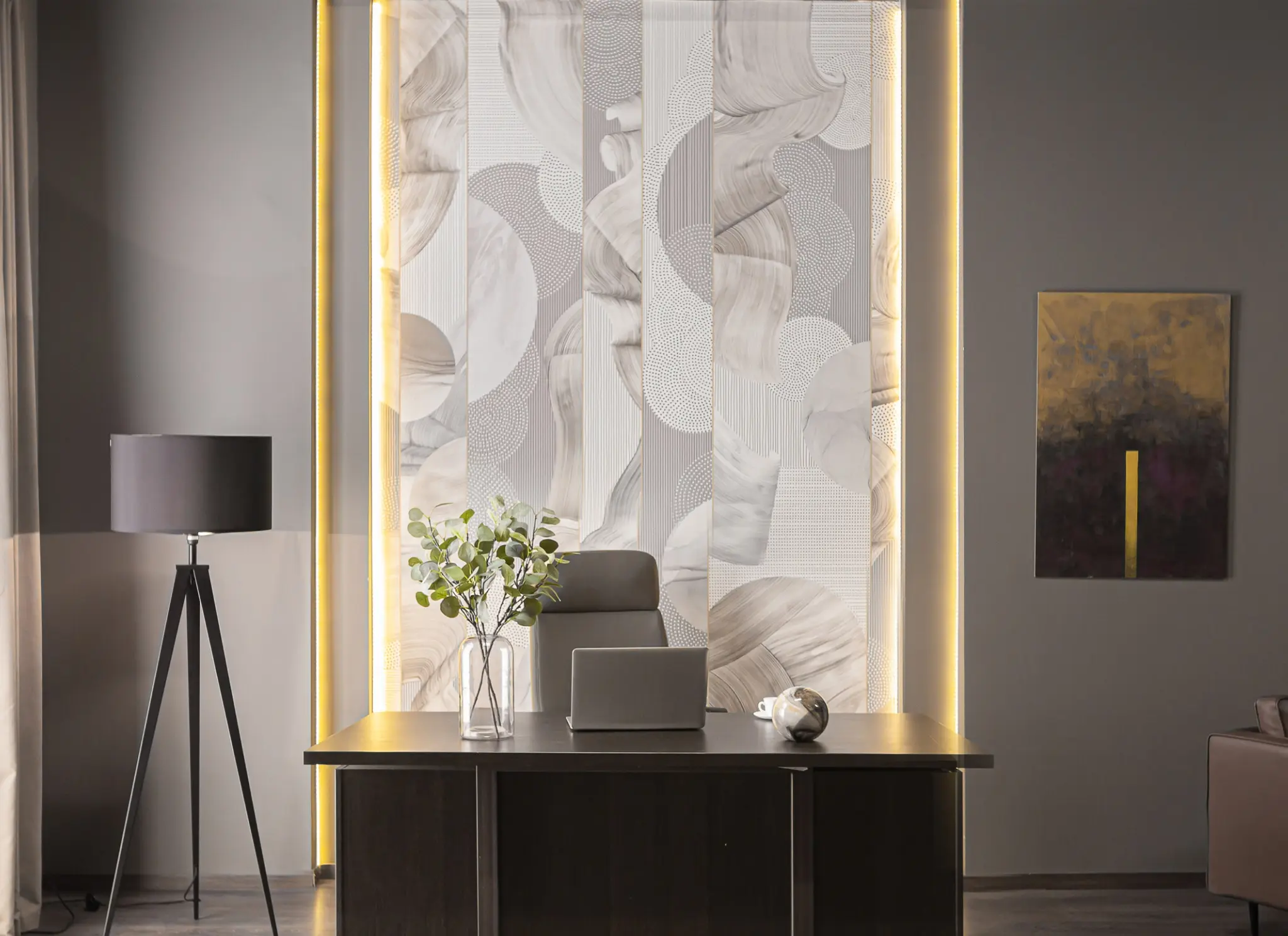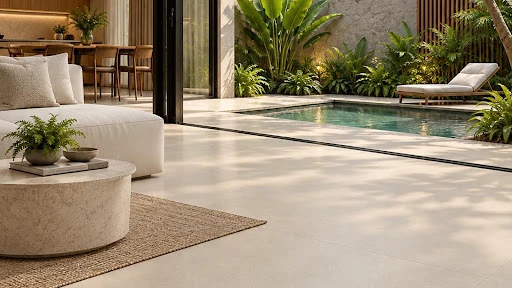

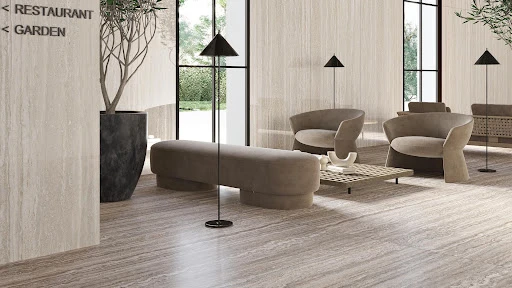
Sintered stone and quartz are both widely used for modern interior projects. Visually, both can deliver a premium look, but their production processes and material characteristics are different.
Those differences affect performance and possible applications. Sintered stone offers characteristics that allow it to be used for a wider range of design needs, including both interior and exterior areas.
What Is Quartz?
Quartz is an engineered material made from quartz minerals combined with resin as a binder, along with pigments to create a variety of looks.
This material is commonly used for interior needs such as countertops, vanities, and other design elements. Its resin content is one of the characteristics that sets quartz apart from sintered stone, especially when facing high temperatures and UV exposure.
What Is Sintered Stone?
Sintered stone is a mineral-based material processed under very high pressure and temperature without using resin as a binder. This process produces a material with high density, very low water absorption, and durability that supports a wide range of design needs.
Unlike quartz, which is generally used for interior needs, the characteristics of sintered stone allow a much wider range of applications, from floors and walls to countertops and façades.
Advantages of Sintered Stone Compared to Quartz
One of the main differences between the two lies in heat resistance. Because it does not use resin as a binder, sintered stone offers better resistance to high temperatures.
The difference is also visible in areas exposed to sunlight. UV resistance allows sintered stone to be used for both interior and exterior needs, giving it wider application flexibility.
Beyond material performance, sintered stone can also be produced in big slab formats, which create larger surfaces with fewer joints. This gives a more seamless look and opens up more possibilities in design.
Titanium Sintered Stone, Performance in a Big Slab Format
Titanium Sintered Stone is brought to you by PT Surya Multi Cemerlang, part of Platinum Ceramics Group, which has 55 years of experience in Indonesia’s tile industry. Titanium Sintered Stone comes in a big slab format of 120×240 cm, creating larger surfaces with fewer joints. It is produced with the Lamina Machine, Italian technology with up to 10 times the pressing force of conventional machines, and is Halal certified. Titanium Sintered Stone also has a bending strength of over 400 kg/cm² and water absorption below 0.05%.
Backed by UV resistance, Titanium Sintered Stone can be applied to a wide range of interior and exterior design needs, giving you more flexibility when designing a space.
More Possibilities with Titanium Sintered Stone
Material development means design needs are no longer only about appearance. Performance, application flexibility, and the ability of a material to be used in many different areas are also important considerations.
With its resistance to heat and UV, very low water absorption, and big slab format, Titanium Sintered Stone offers more possibilities for modern design needs, for both interior and exterior.
Ready to bring more possibilities to your design? Explore the Titanium Sintered Stone collection and contact us for further consultation.