
A luxurious-looking interior isn’t always built with the right material. Behind an elegant finish, factors like quality, consistency, and maintenance needs determine how a material actually performs once the space is in use.
This matters even more in hotels, offices, and busy commercial spaces. On premium projects, looking good isn’t enough. The quality behind the look has to be taken into account as well.
Sintered Stone vs Marble: It’s Not Just About Looks
Marble is known for its naturally formed veining, which means each slab can have a different pattern and color. That gives it a distinctive character, but on large-scale projects, the variation between slabs has to be considered when the design calls for visual continuity across many surfaces.
Sintered stone takes a different approach. It is manufactured through a controlled process, so color, pattern, and surface character can be produced with greater consistency from slab to slab.
This difference becomes important when the material is more than a decorative accent and forms part of an overall interior concept that needs to carry through consistently across different areas.
Material Consistency for Project Needs
In hospitality and corporate projects, material requirements can cover large and varied areas. That makes consistency and availability a key part of material planning.
Marble depends on supply from specific quarries. When the source changes or is no longer available, finding slabs with a similar character again can be a challenge for future expansion, renovation, or replacement.
Sintered stone offers more controlled availability. Production and digital printing technology allow a design to be reproduced consistently without relying on a single natural stone source. This gives architects, interior designers, and developers more flexibility when planning the materials for a project.
More Practical Maintenance for Day-to-Day Operations
In busy public areas, maintenance becomes a key consideration once the material has been installed.
Marble needs proper surface care to keep it looking its best. Regular polishing and coating may be part of that routine, especially in high-use areas.
Sintered stone is more practical to maintain. For hotels, offices, and commercial spaces, this helps support daily operations without the kind of surface treatment that marble requires.
In other words, choosing a material for a project isn’t just about the purchase cost. It also means thinking about what it takes to maintain the material after installation.
Titanium Natural Marble Patterns for a Range of Premium Interiors
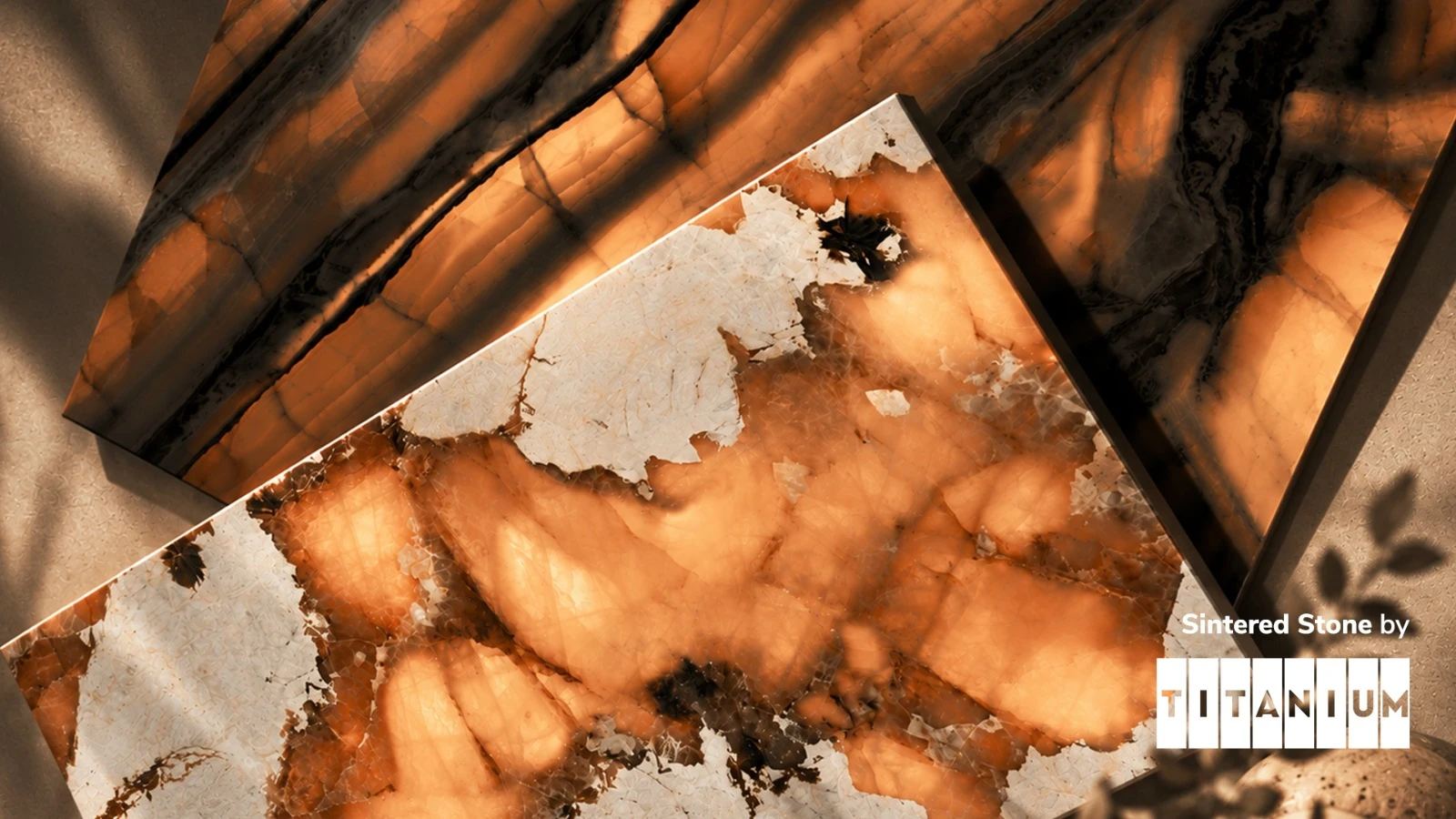
For premium interior projects, Titanium premium sintered stone offers a wide choice of Natural Marble patterns, including Statuario Imperiale, Calcite Oro, Onicci Nuovo Bianco, and many more. This range gives architects and interior designers the freedom to shape the character of a space around the concept they have in mind.
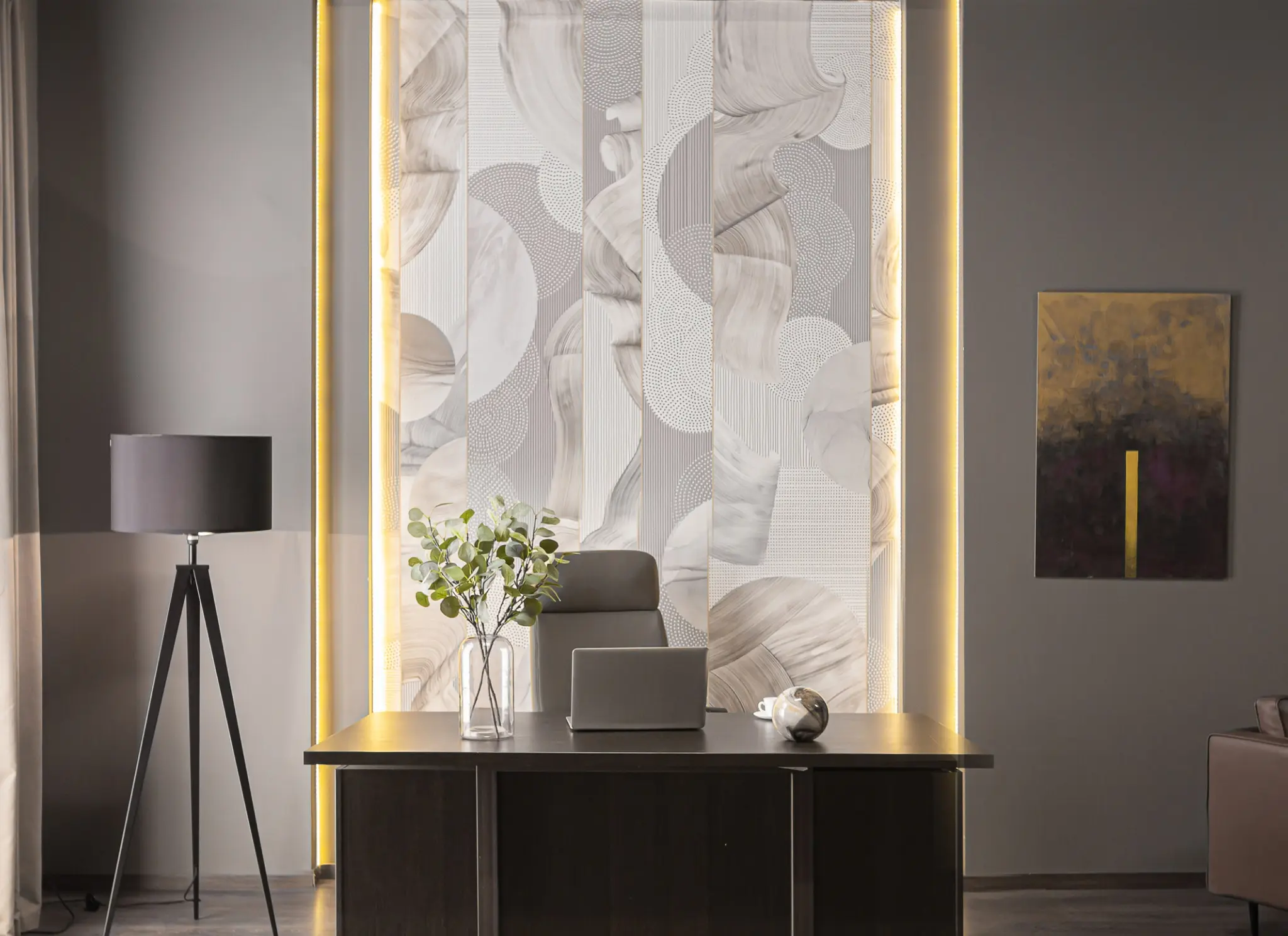
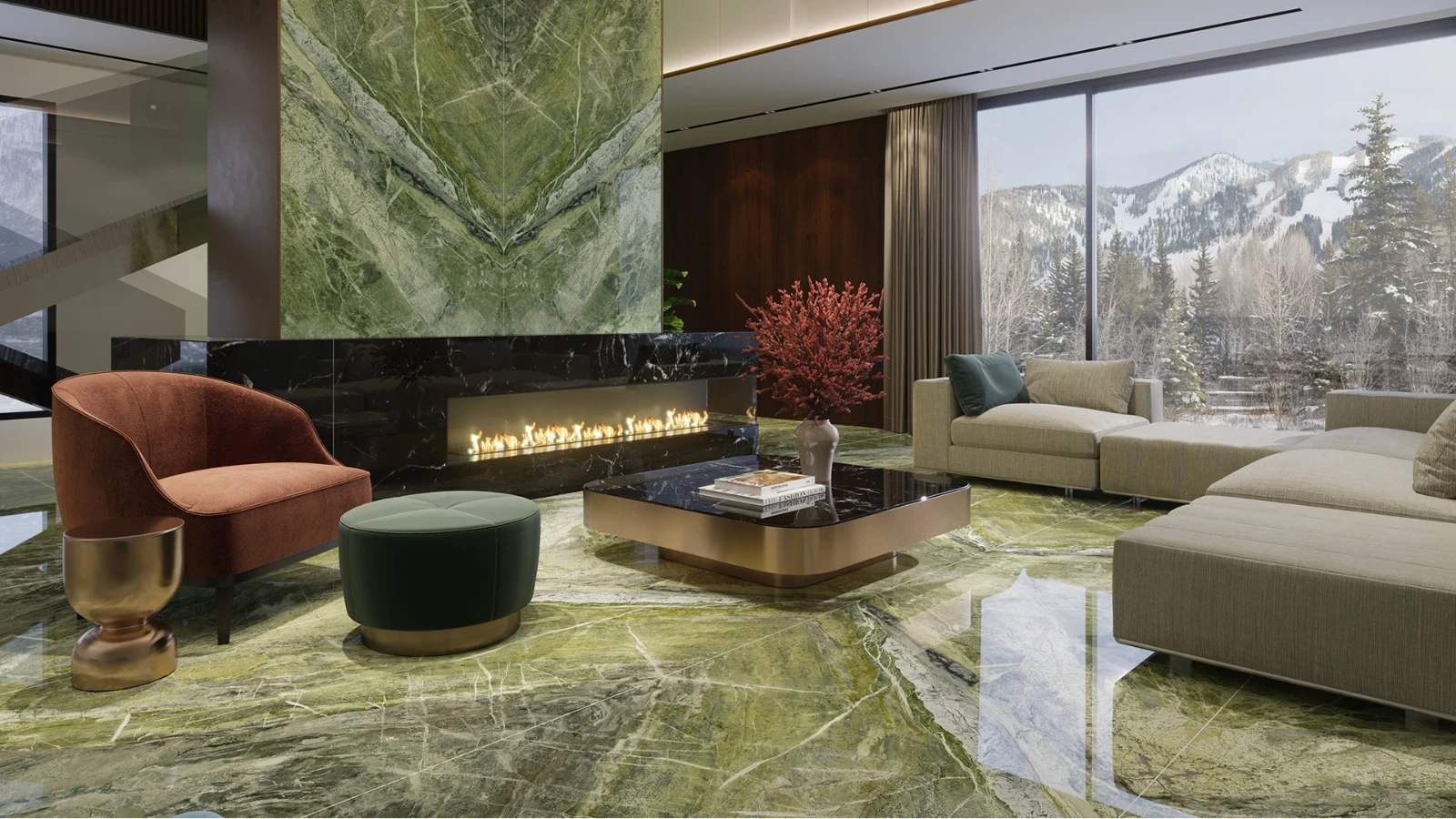
Titanium Natural Marble patterns can be used across a wide variety of interior applications, from feature walls and reception desks to hotel lobbies and front-of-house areas in offices and commercial spaces.
Titanium is a Halal-certified premium sintered stone made in Indonesia. It is produced by PT Surya Multi Cemerlang, part of Platinum Ceramics Group, which has 55 years of experience in the Indonesian tile industry.
Titanium sintered stone is produced on Lamina machines, an Italian technology with 10 times the pressing force of conventional machines, resulting in a denser, flatter, more precise, and stronger material. These qualities support projects that demand both high material quality and a flawless installed result.
With its wide range of Natural Marble patterns, Titanium lets you translate all kinds of interior concepts into an elegant look that suits the character of each space.
Premium Materials for Every Interior Need
Every project has its own character and design requirements. From the areas that draw the eye to the surfaces that shape the overall atmosphere of a room, material choice plays a part in how an interior concept comes to life.
Titanium Premium Sintered Stone offers flexibility for a wide range of interior needs, from hospitality and corporate settings to modern commercial spaces.
Explore the range of Titanium Natural Marble patterns and find the character that fits your project’s design.
Marble has always been associated with luxury, and for good reason. But for procurement teams at hotels or corporate offices, the more important question isn’t just how luxurious it looks, but how much it will cost to keep it looking that way year after year.
Why Marble Is Still a Symbol of Interior Luxury
Natural Veining That Can’t Be Perfectly Replicated
Marble veining forms through geological processes that are unique to each quarry, giving every slab an exclusive visual character. This is what has made marble synonymous with status and luxury for decades.
The Marble Problems Salespeople Rarely Mention
High Porosity and Stain Risk in Public Areas
Like natural granite, marble has a porosity that makes it prone to absorbing liquids. In public areas such as hotel lobbies, where hundreds of people walk through every day, the risk of stains from spilled drinks or dirty shoes is much higher.
Routine Maintenance Costs: Polishing, Coating, and Replacement
Keeping marble’s shine requires regular repolishing and coating, which adds to operating costs. And that’s before you factor in replacing any sections that get damaged.
Dependence on Quarries and Pattern Availability
Natural marble relies on supply from specific quarries. If a quarry runs out or becomes difficult to access, the same pattern may no longer be available in the future.
Sintered Stone as a More Precise Alternative
Marble Patterns Printed Consistently with Digital Printing
Sintered stone uses digital printing technology to produce marble patterns that are consistent across every slab. Our Natural Marble collection is specially designed to capture the look of natural veining without depending on a single quarry.
Material Density That Reduces the Risk of Stains
Because it is processed at high sintering temperatures, the material is much denser than natural marble, making it far more resistant to everyday stains in public areas.
Compare the Total Cost of Ownership, Not Just the Purchase Price
Upfront Cost vs Maintenance Costs Over 5 to 10 Years
Marble may come with a competitive purchase price at the start, but the cost of polishing, coating, and replacement over the next 5 to 10 years often isn’t accounted for at the beginning of a project. Sintered stone requires a clear upfront investment, but its long-term maintenance costs are much lower.
Applications in Hospitality and Corporate Projects
Case Study: Feature Walls and Reception Desks
Several hospitality projects have already used sintered stone for feature walls and reception desks, the areas that attract the most attention and are also the most prone to stains. You can see some examples on our Projects page.
Frequently Asked Questions
Can sintered stone really look like natural marble?
Yes. Modern digital printing technology can replicate the veining and color of natural marble in detail that comes very close to the original.
Why does marble in hotel lobbies often look dull after a few years?
Heavy foot traffic speeds up the wear on the polished layer, while marble’s porous nature allows stains to build up on the surface if maintenance isn’t consistent.
Does sintered stone need coating like marble does?
No. The material is dense enough to resist stains without an additional coating.
How many marble patterns are available in sintered stone?
Titanium offers more than 300 patterns, including many designs inspired by natural marble.
Is sintered stone more resistant to oil and acid stains than marble?
Yes. Its high density means liquids such as oil and mild acids don’t easily soak into the material.
Get the Luxury of Marble in Your Project, Without the Hassle
If you’re designing a hotel lobby, office, or living room that needs to feel luxurious without a heavy maintenance burden, explore the Titanium Natural Marble collection and find inspiration on our Projects page. For large-scale projects, our team is ready to help through Contact Us.